Graveyard Keeper 2 Tech Points — How to Get Red, Green and Blue
Every source of red, green and blue tech points in Graveyard Keeper 2, why red is the bottleneck, and how to pay for Study Table research with Science.
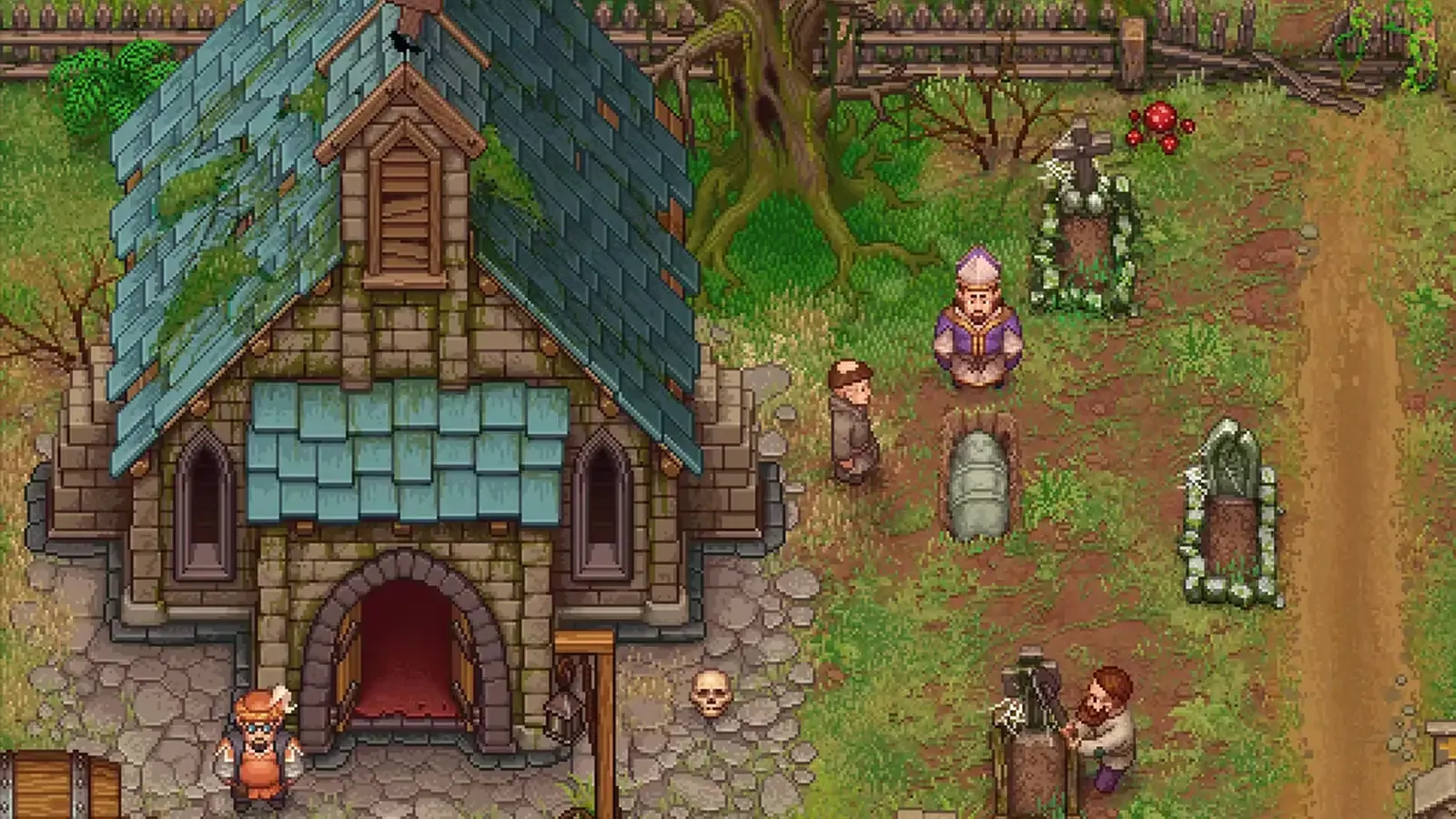
How do you get tech points in Graveyard Keeper 2?
Four ways. You study items at the Study Table, you gather resources, you finish crafting recipes, and you consume certain items that pay points on use. Every one of those channels feeds the same three pools, and the pools are not interchangeable — a node that wants red will not take your surplus green.
The Study Table is the largest single channel by a wide margin, but it is also the only one that costs a second resource to use. Paying for it means farming Science, which comes from the same writing and alchemy chains that the blue tree unlocks.
Which colour of tech point is the real bottleneck?
Red, and it is not close. The five branches demand 11,157 red, 5,129 green and 4,132 blue in total. Studying every researchable item returns 4,885 red, 6,280 green and 5,195 blue — so research alone covers green and blue with room to spare, while red arrives at just 44% of what the tree costs.
That single ratio should drive your planning. Gathering, crafting and direct-use items are not optional extras for red; they are the majority of your red supply. The full branch-by-branch demand is in the tech tree overview.
How do you get your first blue tech points?
From the Study Table in the church basement, which is the first place blue points appear. Before that table is running you cannot meaningfully enter the blue-heavy branches, and this is why the Writing Basic and Writing Supplies research matters so much early — Writing Supplies is what opens Clean Paper, Ink and Science Kit I.
Once the table exists, blue comes from studying everything you can reach. Recipes give blue as well, but the study channel is where the volume is.
Where does the Science for the Study Table come from?
Three items carry Science, and Clean Paper is the one you can mass-produce. Clean Paper gives 1 Science, Science Kit I gives 30 and Science Kit II gives 60. Since each studied item costs between 1 and 50 Science, the kits are what let you chew through a backlog of unexplored materials in one sitting.
Researching also consumes the item itself, and it costs energy — 6 to 32 per study, dropping to 2 to 14 with the Researcher perk. Plan study sessions before you plan anything else that day, because a full bag of unstudied materials is the cheapest red and blue you will ever buy.
What are all the tech point sources?
The table below collects all four channels in one place, with the published red, green and blue values for each. Where a dash appears, that source does not pay that colour or no value has been published. Treat the ranges as per-action payouts, not per-hour rates.
| Source | Red | Green | Blue | Notes |
|---|---|---|---|---|
| Studying all 373 researchable items | 4,885 | 6,280 | 5,195 | One payout per item; bronze, silver and gold count separately |
| Mining stone and ore | 1 to 3 | — | — | Per node broken |
| Chopping trees | 0 to 2 | 1 to 3 | — | Per tree |
| Pulling stumps | 0 to 1 | 1 | — | Per stump |
| Picking berries and flowers | — | 1 | — | Per pick |
| Clearing bushes | — | 1 | — | Per bush |
| Harvesting garden beds | — | 0 or 2 | — | Some crops add 1 to 2 extra green |
| Digging graves and burying bodies | 2 | — | — | Per grave |
| Marble Fence I or II | 15 | — | — | Highest single-craft red payout |
| Master Armor or Master Sword | 12 | — | — | Per craft |
| Chocolate | — | 10 | — | Best single-craft green example |
| Marble Cross II or Marble Fence II | — | — | 15 | Best single-craft blue example |
| Red Techbook / Red Techbook II | 25 / 50 | — | — | Direct use |
| Blue Techbook / Blue Techbook II | — | — | 25 / 50 | Direct use |
| Green Techbook / Green Techbook II | — | — | — | Direct use; per-colour values not published |
| Heavenly salmon | 50 | — | — | Direct use |
| Elder’s meal | 90 | 90 | 90 | Panel shows 30 / 30 / 30 |
| Fisherman’s pie | 30 | 30 | 30 | Panel shows 10 / 10 / 10 |
| Kraken steak, Fried golden carp | — | — | — | Listed as direct-use sources; values not published |
What does gathering pay per action?
Gathering pays in small amounts, repeatedly. Mining stone and ore pays 1 to 3 red per node, chopping a tree pays 0 to 2 red and 1 to 3 green, pulling a stump pays 0 to 1 red and 1 green, and clearing a bush or picking berries pays 1 green. Garden beds return 0 or 2 green.
The two odd entries are graves and beds. Digging graves and burying bodies pays 2 red each, which makes the graveyard itself a red source, and it is the only gathering action that pays a flat red amount rather than a range. Over a long game that adds up more than most players expect.
Which crafted items give the most tech points?
Marble Fence I and II top the list at 15 red per craft, with Master Armor and Master Sword at 12 red behind them. On the green side Chocolate pays 10 green, and on the blue side Marble Cross II and Marble Fence II each pay 15 blue. Those are the highest published single-craft payouts.
The pattern worth noticing is that the best point crafts are also late-game items. You cannot push red with marble before the stonemason and marble quarry lines exist, which is exactly why the mid-game red shortage feels worst right before those chains come online.
Which items give tech points when you use them directly?
Six Techbooks plus five meals. Red Techbook pays 25 red and Red Techbook II pays 50; Blue Techbook pays 25 blue and Blue Techbook II pays 50. Heavenly salmon pays 50 red on use. Kraken steak and Fried golden carp are also listed as direct-use sources, though their per-colour values are not published.
The meals are where the tooltips mislead you. A dish pays out once per colour it lists, so Elder’s meal shows 30 red, 30 green and 30 blue on the panel but actually delivers 90 of each. Fisherman’s pie shows 10 of each and delivers 30 of each. If you are calculating a study or crafting session around a meal’s printed value, you are underestimating it by two thirds.
Do you have to research every item?
Not for the tree to be affordable, but skipping research is the most common long-term mistake. Research supplies 4,885 of the red you need, reveals the alchemy runes on every material you study, and pays blue that no other early channel matches. Selling or discarding materials unstudied trades a one-time payout for permanent scarcity.
There is no research cost to consider twice: each item pays once, and higher-quality versions pay again as separate entries. Cramming materials into the alchemy recipes before studying them is the other half of this problem, because unstudied ingredients cannot be identified at the lab. If you are still early, the beginner first week guide sequences when to research versus when to push tasks, and the energy and insanity guide explains why long study sessions need feeding first.
Related Articles
guides
Graveyard Keeper 2 Beginner Guide — Your First Week
What to do first in Graveyard Keeper 2: the three-stage opening route, a first-week day plan, technology priorities, tired rules and your first zombie.
zombies
Graveyard Keeper 2 Zombie Mastery and Perks — Full Breakdown
Five masteries, 85 nodes and 49–50 named perks: zombie mastery is set by the work station, not the zombie, and every node you buy eats one red skull slot.
tech-tree
Graveyard Keeper 2 Church and Sermons — Full Guide
How to unlock the Graveyard Keeper 2 church, raise church quality to 10 for the first sermon, and how the payout formula turns attendance into Faith.
Was this helpful?
Thanks for the feedback!